What is a rotary evaporator
A plain explanation of the rotary evaporator: how spinning flasks, vacuum and a warm water bath strip solvent from a drink or extract without wrecking aroma.
Contents
- The parts of a rotary evaporator
- How reduced pressure lowers the boiling point
- Solvent evaporation in practice
- Where a rotovap earns its place
- Setting up a safe run
- Aroma recovery for drinks
- Rotovap versus other stills
- Limits and mistakes to avoid
- Rotary Evaporator Questions
- What is a rotary evaporator used for?
- Why does a rotary evaporator spin the flask?
- Does a rotovap need a vacuum pump?
- Can you run a rotary evaporator without a condenser?
- What temperature should the water bath be?
- Is a rotary evaporator safe to use at home?
A rotary evaporator is a piece of glassware that removes a solvent from a liquid by spinning a flask under reduced pressure while warming it gently. The spinning spreads the liquid into a thin film, so the solvent leaves at a lower temperature than it would at normal pressure. A condenser then catches the vapor and returns it as liquid, leaving the concentrated or solvent-free material behind.
- Spinning, vacuum and gentle heat work together, so solvent boils off at a temperature the aroma can survive.
- The condenser is not optional: it recovers the solvent vapor instead of venting it into the room.
- Lower pressure matters more than higher heat when you want to keep delicate flavors intact.
- A cold trap and steady vacuum protect both the product and the pump.
- Scale, solvent and glassware determine how a run is set up, so figures you hear rarely transfer between setups.
The parts of a rotary evaporator
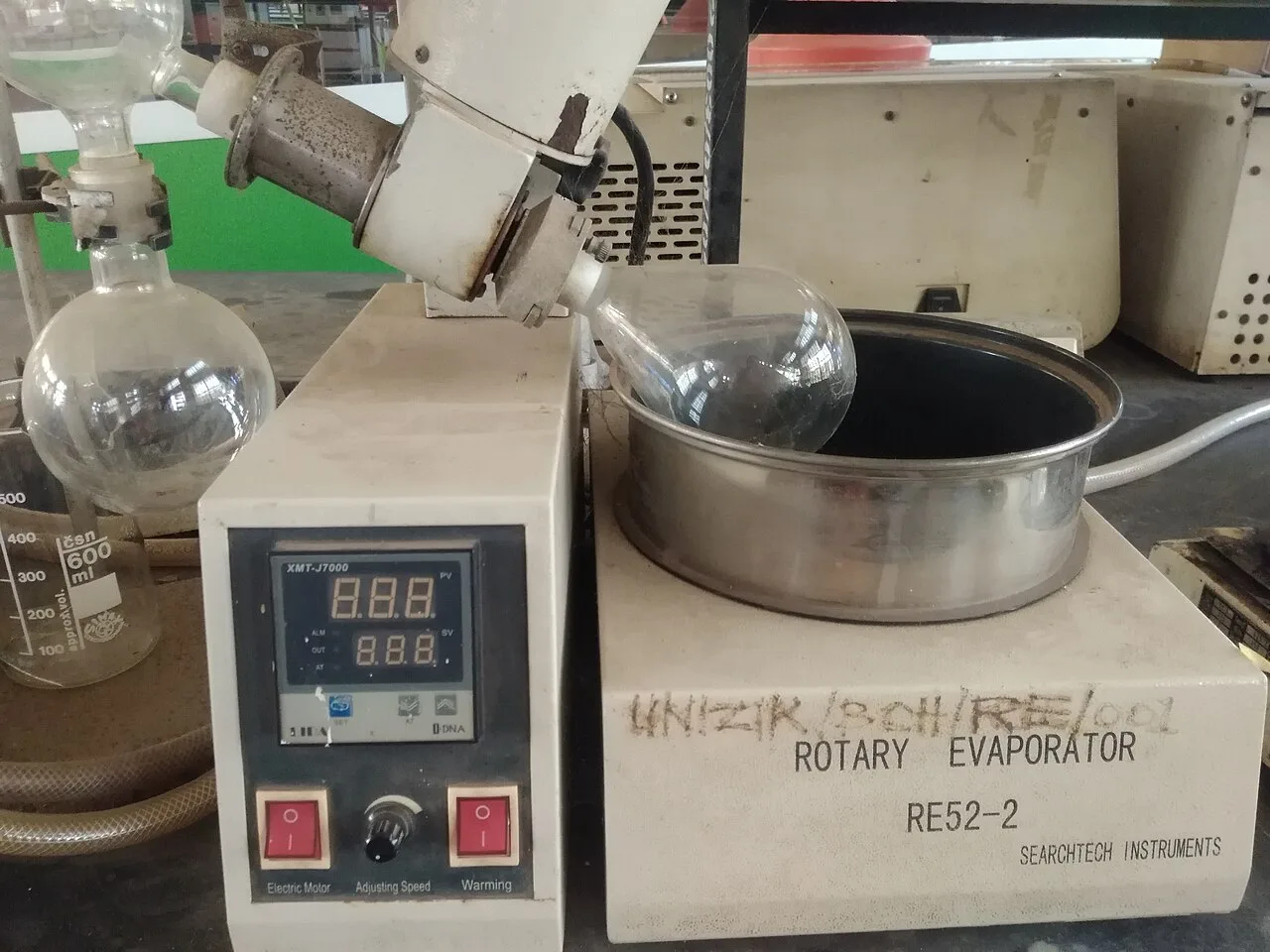
A rotary evaporator, often shortened to rotovap, is built around four parts that work as one system. The distillation flask holds the liquid and rotates in a warm water bath. The condenser coils on the other side of the vapor duct, and a vacuum source pulls air out of the whole assembly.
The rotating flask is the feature that gives the device its name. Turning the flask coats its inside walls with a thin film of liquid, which gives the solvent far more surface to escape from. A motorized lift raises and lowers the flask into the bath so you can control how much heat reaches the sample.
The condenser is usually a coiled glass tube chilled by water or a recirculating chiller. Vapor travels up the vapor duct and meets the cold coil, where it condenses back into liquid and drips into a receiving flask. That receiving flask is how you collect the solvent rather than lose it to the room.
- Rotating distillation flask and motor drive
- Heated water bath with a lift
- Vapor duct leading to the condenser
- Chilled condenser coil
- Receiving flask for recovered solvent
- Vacuum pump and controller
- Cold trap between the apparatus and the pump
How reduced pressure lowers the boiling point
A liquid boils when its vapor pressure matches the pressure around it, and lowering that surrounding pressure makes boiling happen at a lower temperature. A vacuum pump removes air from the rotary evaporator, so the solvent reaches its boiling point with less heat. Reduced pressure is the reason delicate aromatic liquids can be concentrated without cooking off their character.
Water baths on a rotary evaporator are set warm rather than hot, and the exact setting depends on the solvent and on what the liquid contains. Ethanol needs a different bath temperature than water does, and a heat-sensitive extract needs a gentler setting than a robust one. The vacuum level is adjusted alongside the bath to keep the evaporation steady rather than violent.
Bumping is the failure mode to watch for, where the liquid suddenly foams and jumps into the condenser. A spinning flask, a gradual pull on the vacuum and a sensible bath temperature all reduce the chance of it. Foaming mixtures benefit from a slower start and a little more patience at the beginning of a run.
Solvent evaporation in practice
Solvent evaporation on a rotary evaporator is a continuous cycle rather than a single event. Solvent leaves the spinning film, condenses on the cold coil, and collects in the receiving flask while the remaining liquid becomes more concentrated. The rotation keeps refreshing the film so the process does not stall at the surface.
The choice of solvent shapes the whole setup, because each solvent has its own boiling behavior under vacuum. A low-boiling solvent can be pulled off with a mild bath, while a higher-boiling one needs more vacuum or more warmth. Mixing solvents complicates the run, since the more volatile component leaves first and the mixture changes as it goes.
The receiving flask gives you a clear signal of progress, because you can watch the recovered solvent accumulate. When the dripping slows, the sample is close to finished, though residual solvent may still cling to a thick liquid. A longer gentle pass often removes more than a short hot one, and it treats the aroma more kindly.
Where a rotovap earns its place
A rotary evaporator suits any job where a liquid must be concentrated without high heat. In drinks work it appears in the recovery of aroma from fruit, in the concentration of infusions, and in the removal of alcohol from a tincture. The gentle conditions keep volatile compounds that a kettle would drive off.
The apparatus is also a standard tool in laboratories for solvent removal after a reaction or an extraction. Anywhere a solvent needs to be taken off and kept, the condenser makes the rotovap a recovering device rather than a disposing one. That recovered solvent can be handled and reused according to local chemical safety practice.
A rotary evaporator is not a still for making spirits, and it does not improve a liquid that was poorly made. The device concentrates what is already there, so a muddy infusion stays muddy at higher strength. Skill in the drink comes first, and the rotovap simply protects the flavors you built.
Setting up a safe run
A safe rotary evaporator run starts with the glassware checked for cracks and seated firmly on its joints. Grease or clips hold the joints, and the flask must sit clear of the bath before the motor starts. The vacuum is applied gradually, and the cold trap sits between the apparatus and the pump to protect the pump from solvent vapor.
The condenser needs its chilling supply running before any heat or vacuum is applied. Water or a chiller fluid flows through the coil, and the return line runs to a drain or reservoir. Without chilling, vapor passes straight to the pump and into the room, which is both wasteful and hazardous.
Ventilation matters because solvent vapor can be harmful to breathe and can ignite. A fume hood or equivalent extraction is the right place for a rotary evaporator, and ignition sources stay away from the setup. Large runs, unfamiliar solvents and anything involving hazardous materials belong with a trained specialist rather than a home bartender.
- Inspect glassware and seat the joints
- Start the condenser chilling first
- Fit the cold trap before the pump
- Lower the flask into the bath slowly
- Apply vacuum gradually
- Vent the system before opening it
- Switch off heat and vacuum in order
Aroma recovery for drinks
Aroma recovery uses the rotary evaporator to separate the fragrant volatile fraction from a liquid and then return it to a finished drink. The condenser collects those volatiles, and the operator keeps them cool and covered because they fade quickly. This is low-temperature distillation in the sense that the vacuum does the work that heat would otherwise do.
One approach concentrates a fruit juice or an infusion and holds the recovered aroma aside. The concentrated base is then blended back with the aroma at the end, so the drink tastes of fresh fruit rather than cooked fruit. Keeping the aroma separate until the final mix protects it from further processing.
Another approach removes alcohol from a tincture or a wash to make a low-alcohol or alcohol-free base. The ethanol distills over and is collected, while the flavor compounds largely stay in the flask. The result is judged by taste, since the balance changes when alcohol leaves, and a small adjustment of acidity or sugar may follow.
Rotovap versus other stills
A rotary evaporator differs from a pot still in both pressure and contact time. A pot still works at atmospheric pressure and relies on a long boil, while a rotovap uses vacuum and a thin spinning film to shorten the exposure. That shorter, cooler exposure is what protects delicate aroma.
A vacuum distillation apparatus can take several forms, and the rotary evaporator is one of them. The wider family includes simple vacuum stills and short-path setups, each suited to different volumes and different materials. The rotovap is convenient for batch work in glass, where you want to see the process and recover the solvent.
The table below sums up the practical differences, and the right choice depends on the material and the volume rather than on a ranking.
| Setup | Pressure | Heat exposure | Solvent recovery |
|---|---|---|---|
| Rotary evaporator | Reduced | Short, gentle | Good, via condenser |
| Pot still | Atmospheric | Longer, hotter | Depends on condenser |
| Simple vacuum still | Reduced | Moderate | Good with a cold trap |
Limits and mistakes to avoid
The rotary evaporator has limits, and one is that it concentrates rather than purifies. A solvent-free liquid can still hold dissolved solids that will not distil at any sensible setting. Solids, sugars and heavy plant material stay behind, and that may be exactly what you want or exactly what you do not.
Water is slow to remove on a rotovap compared with many organic solvents, and a bath hot enough to speed it up can damage the aroma. Patience with vacuum and a moderate bath is safer than pushing the temperature. Some samples also foam badly and need an antifoam strategy or a smaller batch.
Safety mistakes do the most damage, and they include venting the system while it is still hot and skipping the cold trap. Releasing vacuum too fast can pull liquid into the condenser, and opening a hot flask can release a burst of vapor. Handling the solvent and the waste afterward is a separate job that follows local chemical safety rules.
Rotary Evaporator Questions
What is a rotary evaporator used for?
A rotary evaporator is used to remove a solvent from a liquid gently, under vacuum, while the flask spins. In drinks work it concentrates infusions, recovers aroma and strips alcohol from a tincture. It also serves as general solvent removal equipment wherever the solvent is worth recovering.
Why does a rotary evaporator spin the flask?
A rotary evaporator spins the flask to spread the liquid into a thin film on the glass. That film gives the solvent far more surface area to evaporate from, so the run goes faster at a mild temperature. The rotation also stirs the sample and reduces bumping.
Does a rotovap need a vacuum pump?
Yes, a rotovap needs a vacuum source to lower the pressure inside the apparatus. Removing air lets the solvent boil at a lower temperature, which protects heat-sensitive flavors. A cold trap sits between the apparatus and the pump so solvent vapor does not reach the pump.
Can you run a rotary evaporator without a condenser?
No, a rotary evaporator should not run without a working condenser. The condenser turns solvent vapor back into liquid so it can be collected and kept out of the room. Running without chilling sends vapor toward the pump and into the air, which wastes solvent and creates a hazard.
What temperature should the water bath be?
The water bath temperature depends on the solvent, the vacuum level and how heat-sensitive the material is. A low-boiling solvent needs less warmth than water does, and a delicate aroma needs a gentler setting than a robust extract. Set the bath alongside the vacuum rather than choosing a fixed number.
Is a rotary evaporator safe to use at home?
A rotary evaporator is not a casual home tool, because it involves vacuum glassware, flammable solvent vapor and electrical equipment. Flammable solvents need extraction and a strict separation from ignition sources. Anyone without training in chemical handling should have a trained specialist run the equipment.




